Interview: Olivier Picard
Neil Trainis,
15 Jul 2026 12 Min

Neil Trainis,
15 Jul 202612 Min
Neil Trainis,
15 Jul 202612 Min


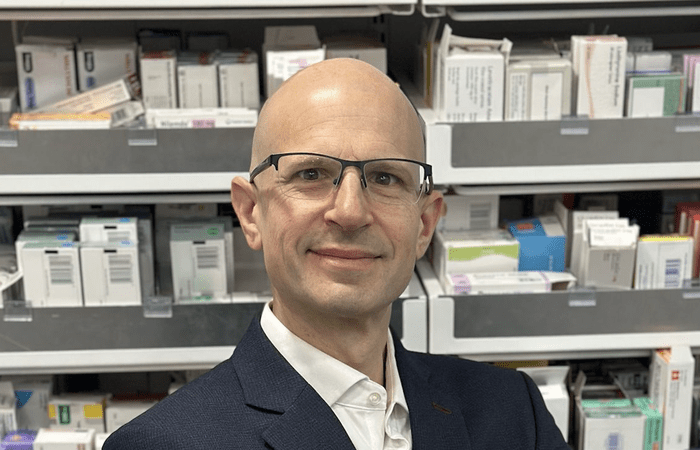
From a six-year pharmacy degree in France, to a stint in The Big Apple, to the challenging life of a pharmacy owner in England, it has been some journey for Olivier Picard. But he has done it with a smile. The National Pharmacy Association chair talks to Neil Trainis…
The American social reformer Henry Ward Beecher once said “a person without a sense of humour is like a wagon without springs. It's jolted by every pebble on the road”.
It’s a view Olivier Picard would probably subscribe to. Despite the tumult engulfing his profession, the National Pharmacy Association (NPA) chair has not allowed the pressure of running four community pharmacies in Berkshire and Buckinghamshire to gnaw at his spirits.
“I’m French-born, I studied in France, I studied pharmacy at the University of Nancy. The joke when I came to England was that people said I was a Nancy boy, which I suppose is very true in the literal sense of the term,” he says, deadpan, looking straight at me from across a table in a room at the NPA’s St Albans headquarters.
I imagine most pharmacy owners find it difficult to use humour as a tool to cushion the stress of severe financial burdens imperilling their livelihoods. On second thoughts, maybe they do allow themselves an occasional guffaw, given well documented research linking laughter to stress reduction and improved immunity.
Olivier doesn’t use humour to downplay the troubles which have long blighted community pharmacy. He’s simply charismatic. He knows exactly how contractors feel because he’s in their shoes.
Like them, he’s on pharmacy’s frontline, in the trenches, enduring medicines shortages, dispensing at big losses, trying to deal with increasing overheads and operating his pharmacies to the backdrop of a pharmacy contract that provides little stability.
Olivier is also plain-speaking, an effective communicator, which was probably why he was appointed NPA chair and has been a Community Pharmacy England (CPE) committee member. He hasn’t held back in the national press when articulating, not only what his sector is going through, but what it is capable of.
An adventurous streak
During the years he spent studying pharmacy in France, the young Olivier had an adventurous streak. He wanted to travel. So, when he realised that as part of his six-year pharmacy degree, he might be able to do his fifth year pre-registration in a hospital pharmacy in another country, he leapt at the opportunity.
“I went to see the dean of the university and said I’d like to study abroad and he said ‘well, we don’t really have a process for this. If you want to go abroad, you’re going to have to sort it out yourself’.
“So, I asked everybody I knew who lived abroad. I was 23 and had never really travelled. I grew up in Nancy. Anyway, I thought I’d give it a go and asked everyone and eventually, someone gave me a couple of options.”
Those included a hospital in Jerusalem and two in the US, one in New York, one in Houston. Olivier chose New York. He says the appeal of The Big Apple was too “great” to resist.
“It sort of happened a bit last minute. I did my four months there, had an absolutely amazing time. I wasn’t speaking much English at the time but I came back speaking better English. Why this is relevant is because just before I went to the US, I met an English girl who is now my wife.
"When I returned from my training in New York, I thought ‘I quite like this experience’. So, I went to see the dean again and I said ‘could I do the same thing, my pre-reg year in community (in the sixth year) and spend three or four months abroad?’
“I had the idea of coming to England where I literally followed my heart. And he went ‘Oh, well, we don’t really allow students to do that once, let alone twice, but there’s nothing stopping you doing it. As long as your pre-reg tutor is happy with it, I won’t object to it’”.
With a slight smile, Olivier offers the tongue-in-cheek suggestion that if he had met a German girl, he would “probably have gone to Germany”.
“I ended up coming to England and knocking on a few doors in pharmacies,” he recounts. One door that began to creep open was Moss Pharmacy. The prospect of working for a chain was alien to Olivier because France was, and still is, a country of independent pharmacies.
A smattering of humour
“I hadn’t understood the concept of chains. And therefore, when the person in that store said ‘I’m the pharmacy manager’ and ‘before I can take anyone on, I’m going to have to ask my area manager’, my first question was ‘what’s an area manager?’ In France, it’s not something that exists at all.
“And she said ‘we don’t have a budget’. I said ‘you misunderstand. I don’t want to be paid, I just want to be in England, working, where my girlfriend is studying’. I was in Leicester at the time.
“And she said ‘oh, you don’t want to be paid?’ Then, they basically took me on and I ended up at Moss Pharmacy where I started.
“Those three or four months I was there, because it was a newly acquired pharmacy by Moss, they had lots of bigwigs from Moss coming in, the HR director, the managing director, all these people coming in to see the new pharmacy.”
Eventually, someone at the chain told Olivier that if he ever came back to England and wanted a job, he should “come and talk to us”. He went back to France, finished his degree, did his PhD thesis, and returned to England as soon as he could to see if Moss would be true to their word. “I went back to them and said ‘once, you said…’”
Olivier ended up working there for six years but it might have all been very different, as he recounts with a smattering of humour once more. As a child, he wanted to be a vet. “I’m a third-generation pharmacist and the last thing I wanted to do was be a pharmacist”, he says with the hint of a smile, before recounting the first of two stories outlining why veterinary medicine appealed to him far more than pharmacy.
“I used to cycle wherever I went in France because I hated public transport and still do. I used to go on my bike and go to school on my bike, wherever.
“I remember cycling home. I used to live in a one-way street that was downhill and in order not to follow uphill from the street before going up and back down to get to my house, I used to cycle up the wrong way of a one-way street back to my house.
“Once, I did it and I faced a police car which stopped me and he said ‘what are you doing?’ I said ‘I just live in that house there and I can’t be bothered to go round the block’. And the guy said ‘what’s your name?’ I said ‘my name is Olivier Picard’ and he said ‘ah, I never want to see you cycling the wrong way on a street again. Off you go’.
“An hour later, the phone rings at home and I answer it and it’s my father. He said ‘I’ve just had the police in the pharmacy. What are you doing cycling up the wrong lane?’
“At that stage, the feeling that hit me was ‘I can’t stay in this town where everybody knows’ because it was a small town. I thought ‘what else can I do?’ And I wanted to be a vet. And here comes the second part of the story…”
Olivier takes me back to the late 1980s, early 1990s, when he was a teenager on work experience with a local vet “for big animals, cattle, horses”.
“There were no mobile phones at the time and this chap had a mobile phone and it was (large). He carried it like a rucksack and he would put it in the car and it would take up a whole seat.
“He gets a call to say there is an animal in distress and he says ‘come with me’ and we drive to the farm, an hour-and-a-half, and we arrive there and there’s a cow in distress, trying to deliver a calf. And, no kidding, the coolest things I’ve ever seen in my life is seeing that vet put a glove the size of his arm, going with his arm up the cow’s … and pulling the calf out.
"The story ends well, the calf makes it, the cow, the mother, make it, and I thought ‘that is what I want to do in life’. Unfortunately, I didn’t quite get the grade I needed to be a vet and I had to rethink my future.”
Political campaigning in 1970s France
Pharmacy ran in Olivier’s family. His father Alain is a pharmacist, as was his grandmother. Alain was a big influence on Olivier, encouraging his son to be intrepid and keep an open mind.
“My father said ‘you don’t have to live in Nancy and you don’t have to be a community pharmacist. With a pharmacy degree, you can do whatever you want. You can work in industry, you could work in hospital, you could work in clinical trials, you could be anything with a pharmacy degree’.
“To this day, I believe he had an excellent point. That actually, as a pharmacist today, there are so many doors that could open with the degree we have. Unfortunately, I think I enjoy the role of a community pharmacist too much. When I started doing the role, I absolutely adored it.”
Olivier’s mother Carole was a student of philosophy, politics and economics and worked on a couple of political campaigns in the early 1970s.
One of those was for Jean-Jacques Servan-Schreiber, a French journalist and politician who co-founded the weekly Paris-based magazine L'Express in the 1950s alongside the screenwriter Françoise Giroud.
“He didn’t get elected and that ended (my mother’s) political career. At that stage, my father was just about to open a pharmacy and they did it together,” Olivier recalls.
Carole worked with Alain in the pharmacy for a few years before they divorced and Carole became the manager of a nursing home. Her political campaigning intrigues me.
“She was literally working as one of the staff for candidates who were putting themselves up for election as MPs,” Olivier says.
“She was in the back room, writing political statements, trying to promote them, get them the gigs, the speeches they needed, knocking on doors, the things that still happen today. This was in the late 60s, early 70s.”
In the 2020s, life as an independent pharmacy owner is, at its worst moments, hellishly tough. I don’t know how Olivier and other owners keep going given the extreme problems they have to deal with, notably subsidising the NHS because a broken medicines reimbursement system leaves them out of pocket. Olivier says he is “losing tens of thousands in a pharmacy doing 7,000 items”. But he has no regrets.
“Absolutely none whatsoever. Two reasons for this. I live in a wonderful area in Buckinghamshire with a wonderful wife and two wonderful children and life could’ve been very different in France. Better, worse? I couldn’t tell you.”
He suggests a move to France, where there is no competition from corporates but where regulations restrict owners to one pharmacy, might “potentially” leave him “better off financially” but would stifle his entrepreneurial flair.
“What the UK has offered me is an opportunity of owning four pharmacies, however hard that is today. In France, I would’ve probably taken a loan over 15 years which I would have had to refinance every four or five years.
“And it would probably take a lifetime to repay my pharmacy because the premium in France is so high on buying a pharmacy. So, I don’t have any regrets. What I’m seeing in France now is what happened 10 years ago in the UK.”
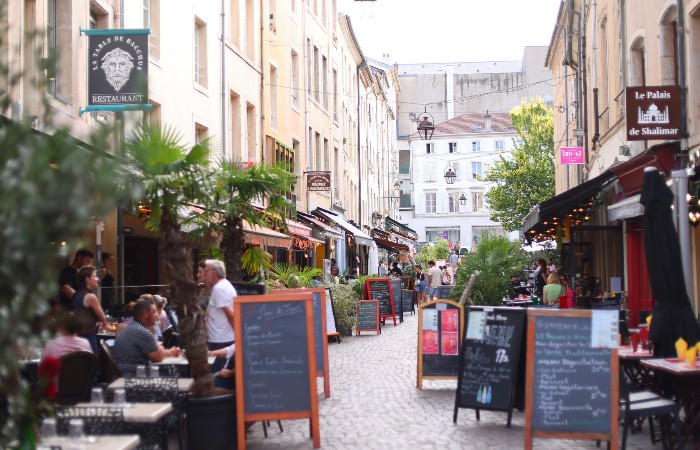
Olivier says he often pops back over the English Channel to speak to independent pharmacy membership organisations in France to understand what they are learning from the UK and what knowledge could be gained vice-versa.
Pharmacies in France, he says, have gained some valuable insights. “They are interested in what we have gone through over the last 10 years in order not to copy the mistakes that have happened in the UK, if you can call them mistakes…the political decisions.
“They are using the UK model as an aspiring model of delivering services because they also realise that dispensing perhaps doesn’t have the future that we all want, so they want to go down the services route.
“But at the same time, they want to retain the supply function, they want to remain viable and they are looking at the decisions that have been made here, which has led to the situation we’re in. We are 10 years further down the line to where they are and they are looking at us now and thinking ‘let’s not make these mistakes’”.
Grumblings of discontent
Community pharmacy in England has had to take a hard look at itself too. There have been grumblings of discontent with its negotiating body.
Last year, CPE chief executive Janet Morrison defended secret voting on its committee by insisting it doesn’t reveal how individual members vote to “avoid lobbying and undue influence by more vocal parts of the sector”.
Former North-East London LPC secretary Hemant Patel asserted there was a “secret cabal" within CPE. "They are a union! Can you imagine a union going back to the constituency and saying ‘I can't tell you how I voted’. It is nonsense!” he exclaimed.
I ask Olivier if he thinks a lack of transparency damages contractors’ trust in CPE. “It’s important you understand there is nothing stopping a committee member telling the world how they voted,” he says calmly.
“On the deal last year, 24 people voted. All these 24 people are allowed, if they want, to say how they voted. I voted against the deal. I’ve said it many times. I had my reasons but I voted against the deal.
“What is not happening is CPE telling who voted for what and even how many people voted for or against. I don’t think we should go back in terms of time and reveal that.
“But I think going forward, there should be a process that allows…it’s the first rule of politics…if I vote for an MP and that MP votes in parliament, I want to know how they voted.”
One question has come up more than once: ‘Does everyone on the committee see the full contents of the Department of Health and Social Care’s opening letter to CPE setting out what will be discussed during the negotiations?’
Former Royal Pharmaceutical Society president Ash Soni mentioned it in the run-up to the 2026-27 talks. Olivier went one further, revealing he never saw the opening letter leading up to the 2025-26 funding negotiations when he was on the committee.
Naturally, that raises another question: does CPE’s 13-strong negotiating team comprehensively pass on committee members’ views when they are in a room with the Department of Health and Social Care and NHS England?
It felt like a rigorous process
“The CPE process is probably what needs to be looked at,” Olivier suggests. “Is CPE bold enough to go and ask the government? Is CPE transparent enough with the whole process?
“I completely understand, having been at the table before, of the need for keeping things in-house because you don’t want to undermine the negotiation or the consultation going on between the Department of Health and Community Pharmacy England. But there are some elements of the process which probably need to be looked at going forward so that the process works for everyone.”
When Olivier was on CPE’s committee, was he, not only 100 per cent confident its negotiating team passed on his and other members’ views during negotiations, but were completely transparent with committee members?
“My personal experience on the committee, when we went through the process, it felt like a rigorous process which had elected members of the committee to go back on behalf of us all – you can’t take 26 people into a room – so you elect a number of people representing the sector.
“Does that leave room for gaps? Probably. Can I say hand on heart that I have seen every communication and been given the detail of every conversation that happens? No.”
Does Olivier think he should have “seen every communication” and been given details “of every conversation?”
“I think there are some elements that could have been done different. I’ll give you an example. The process between CPE and the Department of Health is generally…the people who bat for us are the civil servants at the Department of Health and NHS England. They go to the government and say ‘we need money for pharmacy’.
"And they will write to CPE and they will say to CPE ‘here is an offer’. And the offer will be whatever it is. It could be an uplift, it could be nothing, ‘here is the money we can give you’. And what CPE does is talk about how that money is distributed so it can be earned by contractors. That’s very important to understand. When I was on the committee, that letter was not shared with me.
“So, I saw the final offer, I saw the deal that we were to vote on. But I never saw that letter. So, can I put hand on heart and say I know everything that was in that letter and am I confident everything that was in that letter was actually discussed, agreed or not? I can’t because I never saw that opening letter.”
For its part, CPE says it does not “provide a running commentary on negotiations” because it is “tied into confidentiality”. Olivier is philosophical.
“I think the CPE committee is evolving and we saw changes last year and I think they are trying to represent the sector,” he says, insisting he’s “an eternal optimist” and opining that independent pharmacy has “a bright future”. But that comes with a sobering caveat.
“Not without investment in the network. We need to diversify our offering. We can’t be, all of us, looking after automation. It’s hugely important for the government to ensure medicines supply gets to people’s homes.
“Community pharmacy is the primary actor to that. But there is more we can do (in) the prevention agenda…patients want to use pharmacy.
“I think the future for pharmacy is bright and I think we need to be brave in the step we take towards that. But we have to be on a sustainable footing.”
This interview took place before the announcement of the 2026-27 community pharmacy funding deal.